




The Frozen Job Market Is Thawing: What It Means for Insurance & Wealth Management Hiring in 2026
Karen Childers • May 19, 2026
Key Insights
- After two-plus years of a frozen labor market, the data is shifting in candidates' favor for the first time since 2023.
- Finance and insurance job openings rose by 98,000 in March 2026 alone — after a 184,000 jump in January — per BLS JOLTS data.
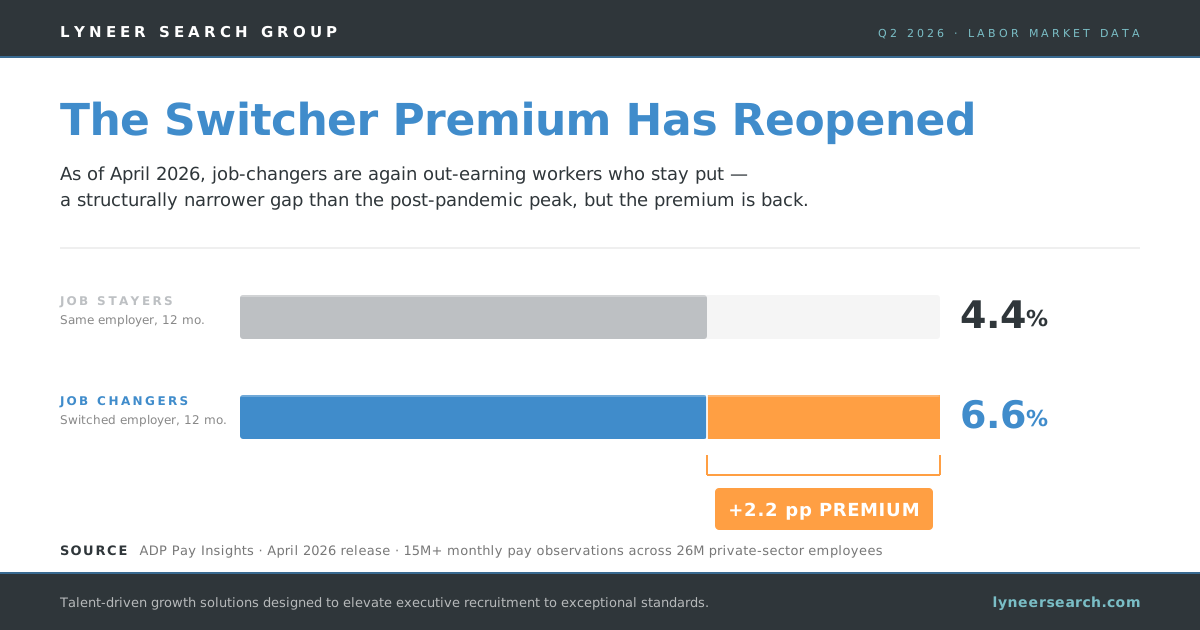
- ADP's April 2026 data shows job changers earning 6.6% year-over-year versus 4.4% for stayers — a 2.2-point premium for moving.
- The structural shortages in our industries — roughly 400,000 insurance retirements by year-end 2026 and a projected 100,000-advisor shortfall by 2034 — are pulling demand forward, not pushing it out.
- For candidates: the window to improve on your situation, not just hold it, is opening.
For hiring managers: the trend is likely to accelerate, so the cost of waiting is rising.
For most of the last two years, the rational move for finance, insurance, and wealth management professionals was to stay put. The market was frozen. Workers held on to what they had because the upside of moving did not feel worth the risk. That calculus is now changing — and the data behind the shift is worth understanding, whether you are weighing your own next move or building a leadership bench.
The Market Has Been Frozen — the Data Proves It
The clearest single measure of a frozen labor market is the quits rate: the share of workers voluntarily leaving their jobs each month. When workers feel confident, they quit more freely because they believe they can land somewhere better. When quits stay low, it signals the opposite.
By that measure, the U.S. labor market has been frozen for a year. BLS Job Openings and Labor Turnover Survey (JOLTS) data shows the national quits rate has sat near 1.9–2.0% for twelve consecutive months — a historically low reading. This is the statistical fingerprint of "job hugging": workers deciding that holding onto what they have is safer than testing a market that no longer feels generous.
Why It's Starting to Thaw
Three signals, all from primary sources, point in the same direction.
Finance and insurance openings are surging. In March 2026 alone, BLS reported that finance and insurance job openings increased by 98,000 — and that followed a 184,000 monthly jump in January. Net, that is more than a quarter-million openings added across two months in Lyneer's core sectors. Demand is building.
The switcher premium has reopened. ADP Pay Insights, which tracks more than 15 million individual pay observations each month, shows job changers earning 6.6% year-over-year as of April 2026, versus 4.4% for those who stayed put — a 2.2-percentage-point premium for moving. The Atlanta Fed's Wage Growth Tracker shows the same gap reopening on a different methodology. For a deeper breakdown of how to weigh that premium against a specific offer, see our companion piece, How to Evaluate a Job Offer in 2026.
The structural shortage is pulling demand forward. The insurance industry is in the middle of a generational handoff: the BLS and the National Association of Mutual Insurance Companies project roughly 400,000 insurance professionals will retire by the end of 2026, with about half the current workforce retiring within the decade. Wealth management faces a parallel dynamic — McKinsey projects a shortfall of roughly 100,000 financial advisors by 2034. These shortages do not wait for the broader market to thaw. They create demand now.
Talent: The "Job Hug" Era Is Ending
If you've spent the past few years in a holding pattern, the window to improve on your situation ,not just hold it — is opening. After two-plus years of a frozen market, candidates who have been waiting it out now have meaningful leverage to move, and the data is on their side for the first time in nearly three years.
That does not mean moving for the sake of moving. It means that the trade-off has changed: the risk of testing the market has fallen, and the reward has risen. Experienced specialists in underwriting, actuarial, claims leadership, accounting, and advisory roles are negotiating from a structurally stronger position than the headline wage numbers suggest.
Here is what changed from last year, and today. In early 2025, the Atlanta Fed Wage Growth Tracker showed something unusual: for the first time since 2009, employees who stayed in their jobs were earning slightly larger raises than employees who switched. We wrote about that reversal at the time and what it meant for negotiation leverage.
That reversal has now itself reversed. As of April 2026, ADP Pay Insights — which tracks more than 15 million individual pay observations each month — shows job stayers earning 4.4% year-over-year and job changers earning 6.6%. That is a 2.2-percentage-point premium for moving. The Atlanta Fed's measure (which uses Current Population Survey data and a different methodology) shows a smaller gap at 3.6% stayers versus 3.8% switchers, but the direction is the same. Switching pays again.
The important context: at the peak of the post-pandemic labor market in mid-2022, the switching premium was roughly three full percentage points. It is now structurally narrower than that, and we expect it to remain so. The era of using a competing offer to engineer a 15–20% pay jump is, broadly speaking, over.
What this means for candidates in insurance, wealth management, and financial services is that the answer is rarely the highest base number on the page. It is the combination of base, bonus, equity, benefits, and trajectory — measured against the industry-specific dynamics of your sector.
Hiring Managers: The Window Is Narrowing — Move Sooner, Not Later
The parallel implication is more urgent. The wage and openings data point in one direction: this trend is likely to accelerate. As more candidates re-enter the market and the switcher premium continues to widen, the cost of an experienced specialist hire will keep climbing.
Carriers, RIAs, family offices, and financial institutions weighing leadership additions in the back half of 2026 should consider moving on those decisions now, before the gap widens further. The firms that lock in key leadership hires sooner will pay less, and lose less time, than the firms that wait.
What This Means
The frozen market is thawing — unevenly, but unmistakably. For candidates, the message is to stop hugging and start looking. For hiring managers, it is to move with discipline and speed. In both cases, the advantage belongs to whoever acts first.
The Market Is Moving. So Should You.
If you've been waiting out a frozen market, the data is now on your side — and the firms that move first will set the terms of the rest of 2026.
Whether you're a candidate ready to improve on your situation or a
hiring manager looking to lock in a key leadership hire before the gap widens,
Lyneer's senior consultants can help you act on the moment.
Frequently Asked Questions
Is now a good time to switch jobs in insurance or wealth management?
The data is shifting in candidates' favor for the first time in nearly three years. ADP's April 2026 figures show job changers earning 6.6% year-over-year versus 4.4% for stayers — a 2.2-point premium. BLS JOLTS data showed finance and insurance job openings rising by 98,000 in March 2026 alone, after a 184,000 jump in January. After two-plus years of a frozen labor market, the window for candidates to improve on their situation — not just hold it — is opening. The structural talent shortages in our industries are accelerating that shift.
I have been "job hugging" — should I keep waiting, or start looking now?
For most experienced professionals in insurance, wealth management, and financial services, the case for moving is stronger now than at any point in the last two years. The national quits rate has been stuck near 1.9–2.0% for twelve consecutive months, indicating most workers have been holding on. As that pent-up demand releases and more candidates re-enter the market, early movers are likely to set the compensation benchmarks the rest of 2026 follows. Waiting longer means competing against more candidates for similar roles.
If I'm hiring, should I move on a search now or wait?
The wage and openings data argues for moving sooner rather than later. The switcher premium is widening, finance and insurance openings are climbing month-over-month, and the structural shortage of experienced specialists — 400,000 insurance retirements by year-end 2026, a projected 100,000-advisor shortfall by 2034 — means the cost of a senior hire is more likely to rise than fall through the back half of 2026. Firms that lock in key leadership additions now will pay less and lose less time than firms that wait.
Who is Lyneer Search Group?
Lyneer Search Group is the specialist executive search firm serving the insurance, wealth management, and financial services industries — placing leaders across finance, underwriting, actuarial, operations, and advisory functions. With 30+ years of industry-specific expertise and the proprietary Lyneer Executive Search Strategy™, we partner with carriers, distributors, RIAs, family offices, and financial institutions to deliver placements built for long-term alignment.

How to hire a statutory accounting leader who can run an NAIC-ready close. Role calibration, interview framework, comp benchmarks, and red flags to screen out.

Insurance unemployment is 1.4% and 43% of carriers are holding headcount. Here's why your toughest Q2 2026 hires need more than standard recruiting.

CIO total compensation hit $1.82M. Three new roles emerged. Discover what's driving compensation growth across family offices and MFOs in 2026 — and download the full benchmark guide.
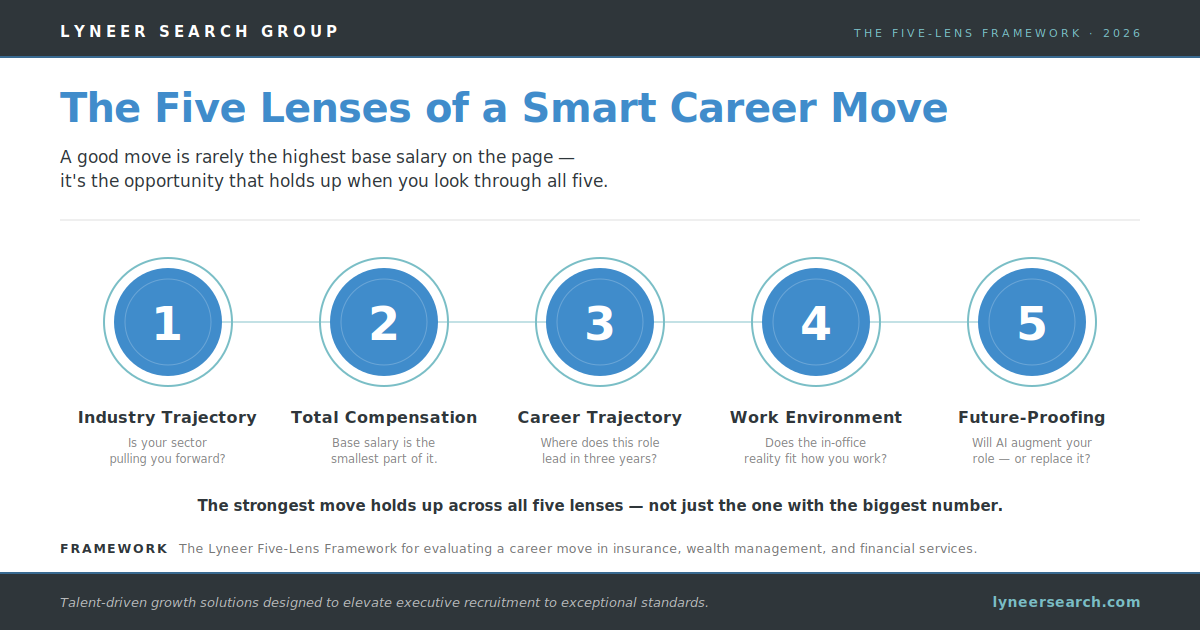
Base salary is rarely the right call. The five lenses that actually determine a good career move in insurance, wealth management, and financial services.

The insurance industry is losing 400,000 workers while five new roles emerge. Specialty underwriters earn 25–50% more than generalists. Download Lyneer's 2026 Insurance Salary Guide covering 80+ roles across carriers, brokers, and MGAs.

If you lead a wealth management practice, you have likely spent the last year hearing some version of the same message: hiring experienced advisors and planners has never been harder. Talent is scarce, competition is fierce, and the candidates you want are not looking.

If you lead talent strategy at an insurance carrier, you are navigating one of the most deceptive hiring markets in recent memory.

International Women's Day 2026 them Give to Gain is a springboard for leadership among industry leaders. Lyneer Search Group Celebrate's their voices and highlights their impact.

Discover how the insurance, wealth management, MFO/ UHNW, financial services industries are evolving as 2026 is changing the game. Gain expert hiring tips and industry insights to navigate 2026 with confidence.

Discover why working with Lyneer Search Group helps middle market insurers expand faster and smarter—accessing top executive talent, reducing risk, and saving time.