




SEC FY2027 Examination Priorities: What RIAs Need to Know About Compliance Hiring
Karen Childers • November 5, 2026
The Securities and Exchange Commission's (SEC) Division of Examinations published its fiscal year 2027 examination priorities on October 23, 2026.
The fiscal year began October 1, 2026, making this the first set of priorities for examinations already underway.
For registered investment advisers (RIAs), the report emphasizes fiduciary obligations, economic conflicts of interest and the effectiveness of compliance programs. Examiners will pay particular attention to fee and expense calculations, investment recommendations, disclosures, and whether firms have adapted their compliance programs following acquisitions, business model changes or geographic expansion.
The priorities also highlight risks involving private funds, illiquid investments, cybersecurity, emerging technologies and third-party relationships.
For RIA leadership, these examination priorities offer more than a regulatory checklist. They provide insight into the expertise firms may need to strengthen their compliance functions.
SEC FY2027 Examination Priorities: The Short Answer
The SEC's FY2027 examination priorities focus on whether investment advisers meet their fiduciary obligations and maintain effective compliance programs that reflect their actual business operations.
Key areas include:
- Economic conflicts of interest and fee and expense calculations.
- Investment recommendations involving complex and illiquid products.
- Compliance program effectiveness and annual reviews.
- Policy updates following acquisitions, business model changes and branch expansion.
- Private fund disclosures, valuation and affiliated service providers.
- Cybersecurity, customer information safeguards and emerging technologies.
- Third-party account access, proxy advisers and regulatory reporting.
Our assessment: RIA compliance hiring in 2027 should favor professionals who can move beyond policy documentation to demonstrate how compliance controls operate in practice. Relevant capabilities include fee and expense testing, disclosure reviews, valuation oversight, conflict identification, examination readiness and post-acquisition compliance integration.
When Did the SEC Release Its FY2027 Examination Priorities?
The SEC's Division of Examinations released its FY2027 examination priorities on October 23, 2026.
The federal fiscal year runs from October 1, 2026, through September 30, 2027. The priorities therefore apply to examinations taking place during a fiscal year already underway.
The Division oversees more than 34,000 registrants across the securities industry, including investment advisers, investment companies, broker-dealers, self-regulatory organizations and other market participants. The SEC emphasizes that the published priorities are not an exhaustive list of examination activities. The Division may adjust its focus as market conditions, investor concerns and emerging risks evolve.
What Are the SEC's FY2027 Examination Priorities for Investment Advisers?
The report identifies three principal areas of focus for investment advisers:
1. Fiduciary Standards of Conduct and Economic Conflicts
Examiners will assess whether advisers meet their fiduciary obligations, including providing full and fair disclosures, conducting appropriate due diligence on recommended products and evaluating the effectiveness of compliance policies and procedures.
Particular attention will go to economic conflicts that could affect the impartiality of investment advice.
Examples include:
- Fee rebates and compensation arrangements.
- Fee and expense calculations.
- Cash management practices.
- Quid pro quo arrangements.
- Deposits and withdrawals.
- Recommendations involving complex, difficult-to-trade or illiquid investments.
Examiners will also consider whether recommended investments are consistent with clients' investment objectives, risk tolerance, liquidity needs and other relevant circumstances.
2. Compliance Program Effectiveness
Examiners will evaluate whether compliance programs address the actual risks associated with an adviser's business and operations.
Areas of review include marketing, valuation, trading, portfolio management, disclosures and regulatory filings, and custody. Examiners will also analyze the components of an adviser's annual compliance review.
The Division will pay particular attention to whether policies and procedures are reasonably designed to address conflicts arising from the firm's operations, including fee-related conflicts.
For firms, this makes the distinction between having documented policies and demonstrating effective implementation particularly important.
3. Never-Examined and Recently Registered Advisers
The SEC will continue prioritizing advisers that have never been examined, including recently registered firms.
Examinations will evaluate regulatory compliance and how firms identify, address and disclose risks and conflicts of interest. For newer firms, this reinforces the importance of establishing a functioning compliance infrastructure early rather than treating compliance as an administrative requirement.
What Changes in an RIA's Business Could Trigger Additional Scrutiny?
The SEC specifically identifies advisers that have:
- Changed their business models.
- Begun advising different types of clients.
- Added new asset classes or advisory services.
- Expanded through mergers, acquisitions or other means.
- Established geographically dispersed branch offices.
Examiners will assess whether these firms have timely updated their compliance programs to reflect business changes and address resulting risks and conflicts of interest.
For firms growing through acquisition or geographic expansion, compliance integration becomes an important operational consideration.
Policies, disclosures, reporting procedures and internal controls need to reflect the firm's current structure and activities.
Which FY2027 Priorities Create Compliance Hiring Needs at RIAs?
The examination priorities have direct implications for the experience RIAs may need within their compliance functions.
The following matrix translates the SEC's examination focus areas into the capabilities firms may want to recruit.
| Exam priority | What examiners will look for | Experience to hire for |
|---|---|---|
| Fiduciary duty and economic conflicts | Fee and expense calculations; conflicts affecting investment recommendations; cash management practices; fee rebates and compensation arrangements; consistency between disclosures and actual practices. | RIA compliance testing, fiduciary oversight and fee billing reviews. Candidates who have tested advisory fees, reviewed Form ADV disclosures, evaluated conflicts of interest and documented corrective actions. |
| Compliance program effectiveness | Whether policies address the firm's actual business activities, including marketing, valuation, trading, portfolio management, disclosures, regulatory filings and custody; whether annual compliance reviews adequately assess these areas. | CCO and compliance program management. Experience designing and maintaining policies, conducting annual reviews, performing risk assessments, testing controls and presenting findings to senior management. |
| Business changes, acquisitions and branch expansion | Whether compliance programs were updated following acquisitions, changes in business models, new client types, additional asset classes or geographic expansion. | M&A compliance integration and multi-office oversight. Candidates experienced in compliance due diligence, policy harmonization, regulatory integration, branch examinations and post-acquisition remediation. |
| Private funds and illiquid investments | Valuation practices, liquidity considerations, fund-level credit facilities, affiliated service providers, conflicts and accurate allocation of fees and expenses. | Private fund compliance and investment valuation. Experience with private equity, private credit, alternative investments, valuation oversight, fund expenses, side letters and conflicts involving affiliated entities. |
| Newly registered and never-examined advisers | Whether firms understand their regulatory obligations, maintain appropriate policies and procedures, and identify and disclose conflicts of interest. | RIA regulatory compliance and examination readiness. Experience preparing firms for SEC examinations, developing compliance infrastructure, managing regulatory filings and responding to document requests and findings. |
| Cybersecurity, emerging technology and customer information | Information security governance, access controls, incident response, customer notification, third-party oversight and safeguards under Regulation S-P and Regulation S-ID. | Cybersecurity compliance and technology risk. Experience with SEC cybersecurity expectations, privacy controls, vendor risk management, incident response, information protection and regulatory implementation. |
| Third-party access, proxy advisers and activist engagement | Controls over third-party access to client accounts and protection of client assets and data; advisers' evaluation of proxy advisory recommendations and related conflicts; timely and accurate filings by advisers with activist engagement practices. | Third-party risk management, proxy voting oversight and regulatory reporting. Experience evaluating service providers, monitoring delegated functions, reviewing proxy voting practices, managing conflicts and preparing accurate, timely regulatory filings. |
The table translates examination priorities into potential hiring needs. It does not represent staffing requirements prescribed by the SEC.
What Other Risks Should Investment Advisers Monitor?
In addition to the three principal investment-adviser areas, the FY2027 report identifies broader examination priorities that affect advisers and other market participants.
Private Funds, Private Credit and Illiquid Investments
The SEC will examine private fund advisers' disclosures and controls addressing fund- and investment-level risks. Areas of attention include the use of debt and fund-level credit lines, affiliated service providers, investment allocations and fee and expense calculations.
The report also identifies complex and illiquid investments, including private fund and BDC loans and investments in private companies through special purpose vehicles.
Registered investment companies and broker-dealers have additional examination considerations involving private credit, valuation, liquidity and trading practices.
Cybersecurity and Emerging Technologies
Examiners will review cybersecurity governance, data loss prevention, access controls, account management and incident response and recovery procedures.
The report also introduces specific attention to super intelligence (SI), including its use by registrants and threat actors.
Examiners will assess how firms prepare for SI-related cyber threats, such as generated phishing messages and deepfake audio and video used in social engineering. They will also review policies and procedures governing the use of SI in compliance monitoring, fraud prevention, back-office operations and trading functions.
Regulation S-P and Regulation S-ID
The SEC will assess whether firms have implemented and maintained policies and procedures addressing customer information safeguards under Regulation S-P.
Examiners will review incident response programs, customer notification procedures and oversight of service providers.
The report also highlights Regulation S-ID, which addresses identity theft prevention, including the identification and response to red flags involving account takeovers and fraudulent transfers.
The amended Regulation S-P compliance dates were December 3, 2025, for larger entities and June 3, 2026, for smaller entities.
Third-Party Relationships and Proxy Advisers
The SEC will examine advisers that use third parties to access client accounts where existing controls may be insufficient to protect client assets and data.
The Division will also review advisers that rely on proxy advisory firms, including how they evaluate the basis for proxy recommendations, identify potential conflicts and determine whether their reliance satisfies applicable legal obligations.
Advisers with activist engagement practices should also pay attention to the report's emphasis on timely and accurate regulatory filings.
What This Means for RIA Compliance Hiring in 2027
Three experience areas stand out.
1. Hands-on compliance testing
Firms need professionals who can demonstrate that policies work in practice, particularly around billing, disclosures, conflicts and annual compliance reviews.
Experience conducting compliance testing, identifying control gaps and documenting remediation will be valuable.
2. M&A and organizational integration
Firms expanding through acquisitions or geographically dispersed offices need compliance professionals who can integrate different policies, procedures and operating practices into a consistent framework.
Experience with regulatory due diligence, integration planning and post-acquisition compliance remediation is particularly relevant.
3. Specialized risk oversight
Private credit, illiquid investments, cybersecurity and third-party relationships require expertise that may sit outside traditional generalist compliance functions.
Firms may need to supplement existing compliance teams with specialists in private fund oversight, investment valuation, technology risk, information security and vendor management.
Lyneer Search Group perspective: The FY2027 examination priorities reinforce the value of compliance professionals who combine regulatory knowledge with operational experience. For RIAs, that means hiring people who can identify gaps, test controls, integrate changing business operations and demonstrate that compliance programs are functioning as intended.
As firms evaluate their compliance staffing for 2027, the ability to translate regulatory expectations into effective business practices should remain an important consideration.
The SEC's examination priorities reflect the Division of Examinations' areas of heightened attention. They are not rules or regulations and do not create new or additional legal obligations.
Sources
U.S. Securities and Exchange Commission, Division of Examinations, Fiscal Year 2027 Examination Priorities, published October 23, 2026.
SEC announcement
SEC Division of Examinations announces 2027 examination priorities
Frequently asked questions
When were the SEC's FY2027 examination priorities released?
The SEC's Division of Examinations published its FY2027 examination priorities on October 23, 2026. The fiscal year runs from October 1, 2026, through September 30, 2027.
What are the SEC's main examination priorities for RIAs in 2027?
The three principal investment-adviser areas are fiduciary standards of conduct, compliance program effectiveness, and never-examined or recently registered advisers. The report also highlights risks involving private funds, complex investments, cybersecurity, emerging technologies and third-party relationships.
What compliance issues will SEC examiners focus on at RIAs?
Describe the item or answer the question so that site visitors who are interested get more information. You can emphasize this text with bullets, italics or bold, and add links.What compliance issues will SEC examiners focus on at RIAs?
Examiners will review economic conflicts of interest, fee and expense calculations, investment recommendations, disclosures, annual compliance reviews and whether policies and procedures reflect the adviser's actual business activities.
Why are mergers and acquisitions relevant to RIA compliance?
The SEC will assess whether advisers that have grown through mergers, acquisitions or other means have timely updated their compliance programs to address changes in their businesses and resulting risks and conflicts of interest.
What compliance experience should RIAs hire for in 2027?
Relevant experience includes RIA compliance testing, fiduciary oversight, fee billing reviews, CCO leadership, SEC examination readiness, M&A compliance integration, private fund oversight, cybersecurity compliance and third-party risk management.
Do the SEC's FY2027 examination priorities create new compliance requirements?
No. The examination priorities identify areas of heightened attention for the Division of Examinations. They do not create new or additional legal obligations.
About Lyneer Search Group
Lyneer Search Group specializes in executive search and talent intelligence for the insurance and wealth management industries. We connect organizations with experienced professionals who understand the regulatory, operational and leadership demands of their markets.
For a conversation about compliance leadership and talent needs, contact Lyneer Search Group.

Insurance jobs fell 2.5% in the year to September 2026, and Charlotte grew 4.1%. See 2026 pay data, search timelines and fees for middle market insurers.

A specialty insurance carrier needed a VP of Claims with property claims experience, based in Tampa. We presented 4 candidates and the client interviewed 3. 2 were solid, and the third was on the verge of an offer. Then senior company leadership stepped in.

How to hire a statutory accounting leader who can run an NAIC-ready close. Role calibration, interview framework, comp benchmarks, and red flags to screen out.

Insurance unemployment is 1.4% and 43% of carriers are holding headcount. Here's why your toughest Q2 2026 hires need more than standard recruiting.

Explore the surge in family office salaries for 2026, including new roles & compensation trends. Contact us for insights!
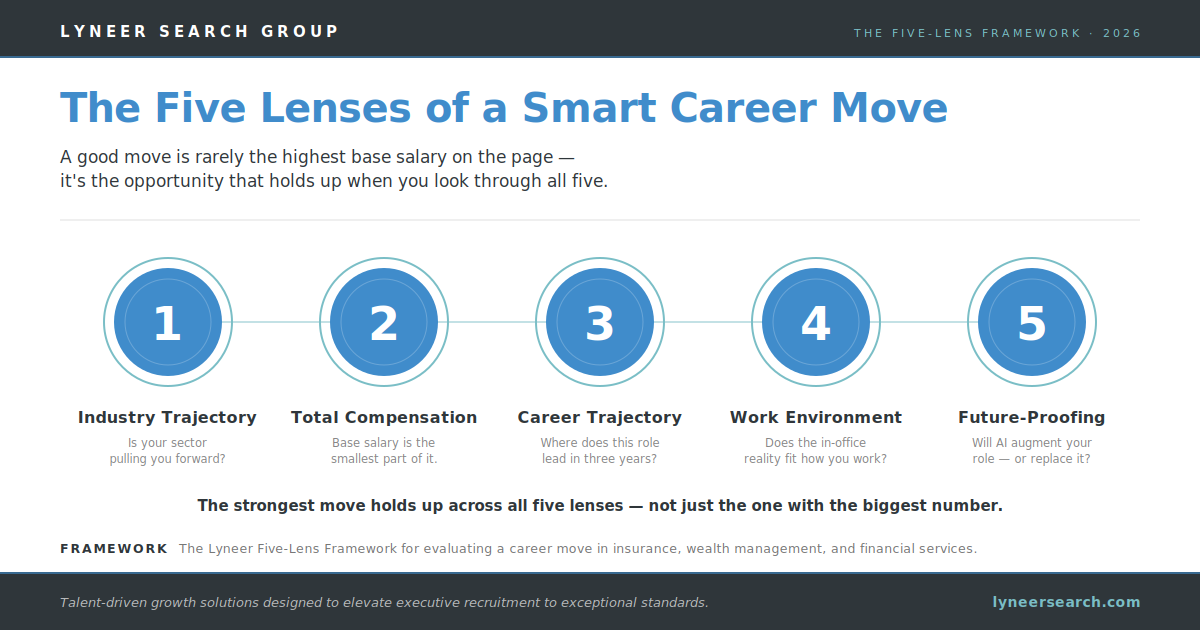
Base salary is rarely the right call. The five lenses that actually determine a good career move in insurance, wealth management, and financial services.

After two-plus years frozen, the job market is thawing. Finance & insurance openings are surging — here's what it means for candidates and hiring managers.

The insurance industry is losing 400,000 workers while five new roles emerge. Specialty underwriters earn 25–50% more than generalists. Download Lyneer's 2026 Insurance Salary Guide covering 80+ roles across carriers, brokers, and MGAs.

If you lead a wealth management practice, you have likely spent the last year hearing some version of the same message: hiring experienced advisors and planners has never been harder. Talent is scarce, competition is fierce, and the candidates you want are not looking.

If you lead talent strategy at an insurance carrier, you are navigating one of the most deceptive hiring markets in recent memory.