




Hiring a Statutory Accounting Leader in 2026 (NAIC-Ready Teams)
June 24, 2026
How to hire a statutory accounting leader who can run an NAIC-ready close. Role calibration, interview framework, comp benchmarks, and red flags to screen out.
One weak close turns into a regulatory story. Your statutory leader's job: tie the company's reporting to NAIC statutory accounting principles (SAP), hold up under solvency review, and survive exam scrutiny.
Quick answer: in 2026, hire statutory leaders who can own the NAIC annual statement cycle start to finish, manage note and disclosure discipline (including prescribed and permitted practice disclosures when they apply), and run a controls-first close. No heroics required.
Download:
Statutory Accounting Interview Kit (NAIC-focused) Includes technical questions, a rubric, and reference-check prompts.
What "good" looks like: close, schedules, and exam readiness
1. "NAIC-ready" means you live inside the filing system
Statutory accounting protects policyholders and supports solvency oversight. NAIC SAP runs on conservatism by design. A strong statutory leader can explain why statutory differs from GAAP in your environment, and defend that difference to anyone who asks.
2. A good close is boring on purpose
Good statutory leaders run a close that's:
- Repeatable: process and documentation survive turnover
- Controlled: review points are real, and evidence gets retained
- Reconcilable: subsidiary ledgers, reinsurance, investments, and actuarial tie-outs all match
- Explainable: variance narratives are tight, consistent, and traceable
3. Schedule and note discipline is non-negotiable
Your statutory leader should know the NAIC statement structure cold. The NAIC Annual Statement Instructions get updated every year, and your leader needs to track every change. Exam readiness comes down to disciplined note handling too: NAIC instructions are specific about consistent numbering and completing every required disclosure.
4. Prescribed and permitted practice disclosures separate the real candidates from the rest
A real statutory leader knows how to document differences from NAIC SAP when they exist. NAIC instructions spell out disclosure expectations for any practice that differs from NAIC SAP, including a table reconciling income and surplus between the state basis and the SAP basis, even when there's nothing to report. That's the rigor you're hiring for.
Role scope: statutory manager vs. director vs. controller
Use this as your internal calibration tool. Mis-leveling is one of the top reasons statutory hires fail in year one.
Statutory Accounting Manager
Best for steady-state operations and clean close ownership.
Typical ownership:
- Quarterly and annual close calendar execution
- NAIC schedules and notes, drafted and coordinated
- Tie-outs with actuarial, investments, tax, and reinsurance accounting
- Documentation and audit/exam request support
What to look for:
- They've personally owned schedules and notes, start to finish
- Deadline discipline and a structured way of working
Statutory Accounting Director
Best for multi-entity complexity and high-stakes stakeholder communication.
Expanded scope:
- Owns the statutory roadmap: process improvement, automation, standardization
- Owns policy positions and technical memos
- Runs exam readiness strategy: request management, consistent narratives, issue remediation
- Coaches managers and builds bench strength
What to look for:
- Defends positions clearly and calmly under pressure
- Has built a process that runs without them in the room
Controller (with statutory responsibility)
Best for organizations where the controller owns the enterprise close and statutory is a core piece of it.
Expanded scope:
- Full close and controls environment, GAAP and statutory together where it matters
- Coordinates across FP&A, actuarial, tax, and investments
- Owns the quality and governance of financial reporting output
What to look for:
- A controls mindset, real process ownership, and influence across teams
- Holds the line on quality even when the clock is running out
Interview framework: technical, leadership, and controls
Step 1: Technical screen (30 to 45 minutes)
Focus on work that proves statutory readiness:
- A walkthrough of how they owned and coordinated an annual statement cycle
- A real example of resolving a statutory treatment issue: what guidance they used, what process they followed, who signed off
- How they coordinated reinsurance, investments, and actuarial tie-outs (role-appropriate detail is fine)
Listen for methodical thinking, documentation discipline, and a clear answer to "here's how I'd prove it."
Step 2: Work sample (60 minutes)
You'll learn more from one work product than ten "tell me about a time" questions. Try:
- Close readiness: "Here's a close calendar with three breaks. What do you prioritize, what evidence do you require, what do you escalate?"
- Disclosure: "Walk me through how you'd keep notes consistent and complete under a filing deadline."
- Prescribed/permitted practice (if relevant): "How would you document the difference and its impact so it holds up in an exam?"
Step 3: Controls and leadership interview (45 to 60 minutes)
This is where you're testing judgment under scrutiny. Score:
- Controls thinking: do they prevent errors, or just catch them late?
- Review discipline: how they coach reviewers, and what "done" actually means to them
- Issue escalation: how fast they raise concerns, and how they frame the risk
- Stakeholder management: actuarial, investments, legal, external auditors
Step 4: Reference checks (targeted)
Ask references what the close actually feels like under this person:
- "What happens when timelines slip?"
- "How do they handle errors, root cause or blame?"
- "Did the process get better, or did it just survive?"
Common failure modes (and how to screen them out)
Failure mode 1: A GAAP-first mindset applied to statutory work What it looks like: a good accountant with weak statutory judgment, someone who can't articulate the rationale behind a statutory decision. Screen for it: ask for a statutory decision they made, and how they documented and defended it. Tie the answer back to the real purpose: solvency and policyholder protection.
Failure mode 2: Reviewer-only experience What it looks like: "I reviewed the schedules," but they never owned production, tie-outs, or deadlines. Screen for it: make them walk through the whole cycle: calendar, dependencies, evidence, and what they personally delivered.
Failure mode 3: The process lives in their head What it looks like: a brilliant individual contributor, but weak documentation and weak delegation. Screen for it: ask for examples of controls and evidence retention, and how they made the process survive without them.
Failure mode 4: Communication that wouldn't survive an exam What it looks like: real technical skill, but inconsistent narratives and a reactive posture under questioning. Screen for it: role-play it. "You get an exam request that implies a concern. How do you respond, gather evidence, and communicate up?"
Failure mode 5: Misjudging the market What it looks like: you can't fill the role at the band you've set. CPA exam participation has dropped more than 30% since 2016, and the accounting pipeline is thin across the board. Screen for it: pressure-test your assumptions against the market: title, comp band, hybrid expectations, and required credentials.
Compensation and title calibration
You don't need a perfect number to start. You need a defensible band and everyone internally on the same page.
1. Anchor to real numbers, then adjust for scarcity
Two baselines worth knowing: the median annual wage for accountants and auditors was $81,680 in May 2024, and the median annual wage for financial managers was $161,700 in May 2024 (U.S. Bureau of Labor Statistics).
Statutory leadership usually commands a premium above the accountant baseline when the role combines NAIC statement ownership, technical depth, cross-functional coordination with actuarial, investments, and reinsurance, plus documentation discipline and exam-facing communication.
2. Calibrate to 2026 budget reality, but don't lowball the role that protects your filings
WTW's 2026 survey puts average U.S. salary increase budgets at about 3.5%, holding steady from 2025. Use that as your overall climate read, not as a ceiling for a role this important to filing quality and regulatory readiness.
3. Title calibration rule of thumb
- Need hands-on schedule ownership and calendar execution? Hire a manager.
- Need policy leadership, exam-readiness leadership, and modernization? Hire a director.
- Is statutory one pillar of enterprise reporting governance? Pair a controller with a statutory director reporting line.

Insurance unemployment is 1.4% and 43% of carriers are holding headcount. Here's why your toughest Q2 2026 hires need more than standard recruiting.

CIO total compensation hit $1.82M. Three new roles emerged. Discover what's driving compensation growth across family offices and MFOs in 2026 — and download the full benchmark guide.
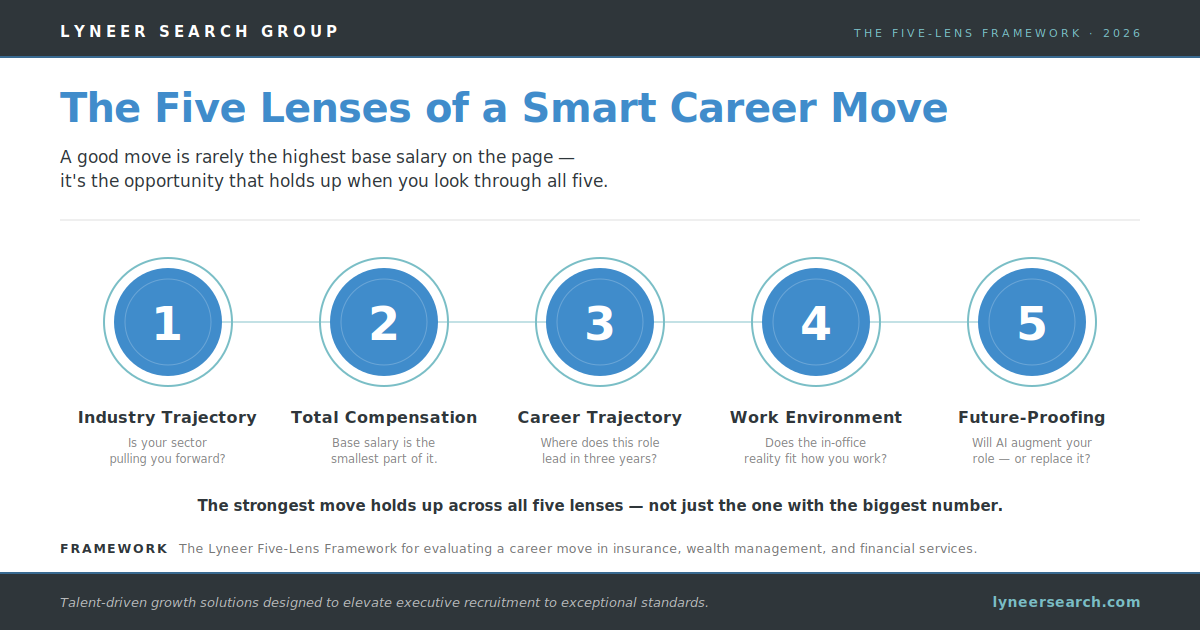
Base salary is rarely the right call. The five lenses that actually determine a good career move in insurance, wealth management, and financial services.
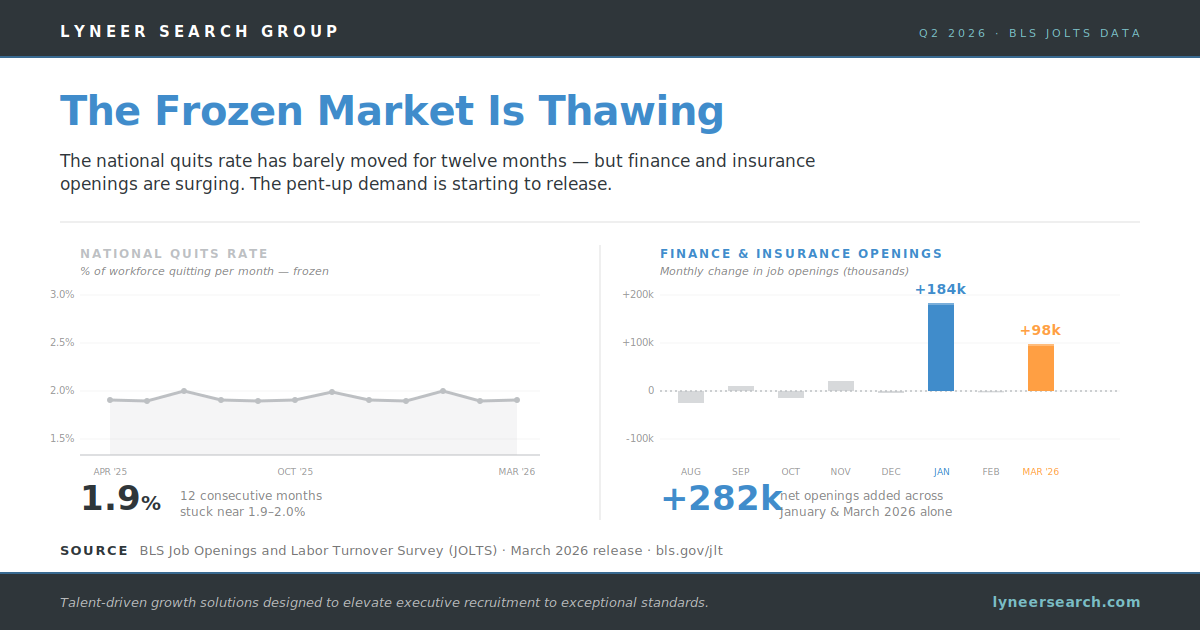
After two-plus years frozen, the job market is thawing. Finance & insurance openings are surging — here's what it means for candidates and hiring managers.

The insurance industry is losing 400,000 workers while five new roles emerge. Specialty underwriters earn 25–50% more than generalists. Download Lyneer's 2026 Insurance Salary Guide covering 80+ roles across carriers, brokers, and MGAs.

If you lead a wealth management practice, you have likely spent the last year hearing some version of the same message: hiring experienced advisors and planners has never been harder. Talent is scarce, competition is fierce, and the candidates you want are not looking.

If you lead talent strategy at an insurance carrier, you are navigating one of the most deceptive hiring markets in recent memory.

International Women's Day 2026 them Give to Gain is a springboard for leadership among industry leaders. Lyneer Search Group Celebrate's their voices and highlights their impact.

Discover how the insurance, wealth management, MFO/ UHNW, financial services industries are evolving as 2026 is changing the game. Gain expert hiring tips and industry insights to navigate 2026 with confidence.

Discover why working with Lyneer Search Group helps middle market insurers expand faster and smarter—accessing top executive talent, reducing risk, and saving time.